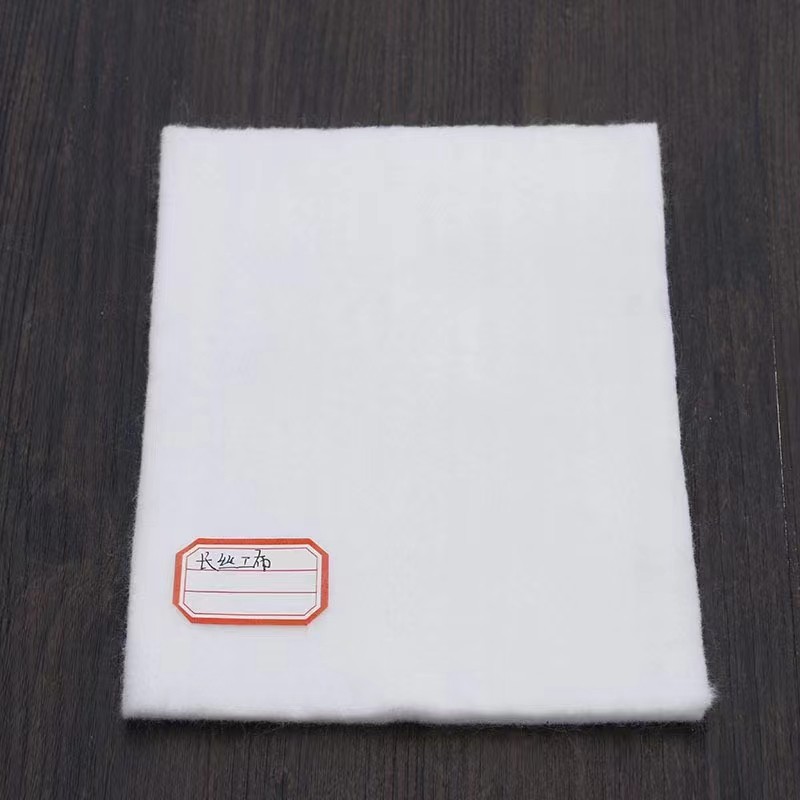
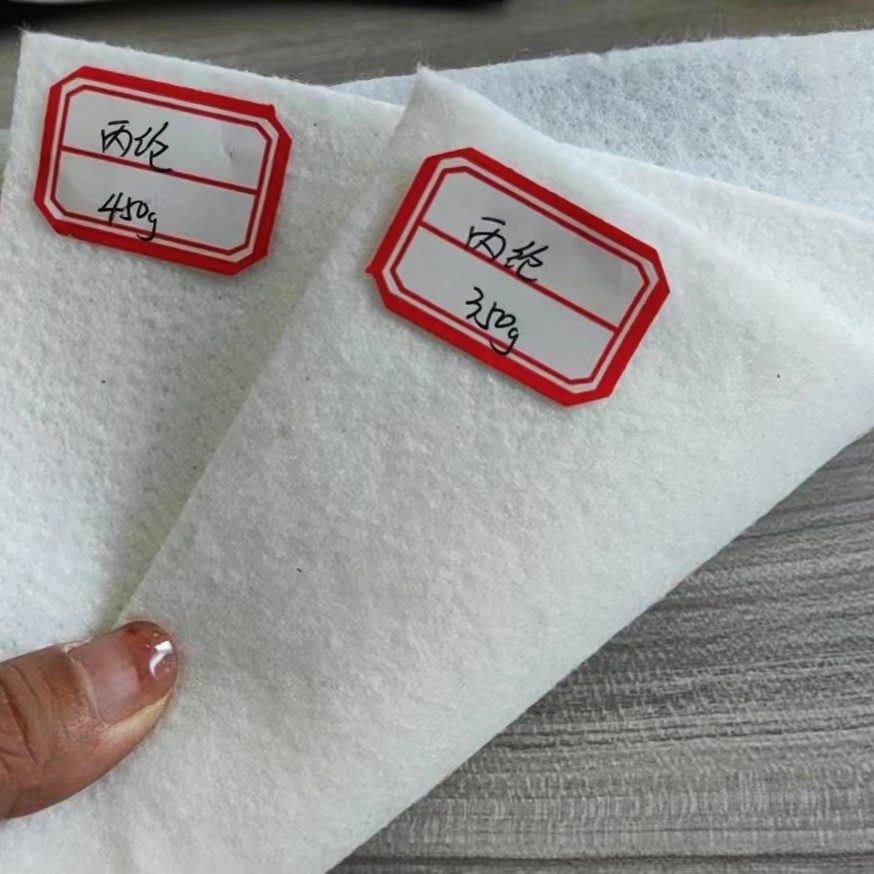
Nonwoven Geotextile Fabric
The core advantages of geotextiles can be summarized as comprehensive functions, excellent performance, low cost, easy construction, long service life and high environmental friendliness, suitable for multiple scenarios.
- Versatile Functions: Integrating isolation, filtration, drainage, reinforcement, protection and anti-seepage in one, this single material solves various engineering problems.
- Superior Mechanical Performance: Maintains high tensile strength and high elongation both in dry and wet conditions, with bidirectional tensile strength up to 20-80kN/m. It can effectively disperse stress, reduce settlement and improve foundation bearing capacity by 2-3 times.
- Durable and Corrosion-Resistant: Made of chemical fibers such as polyester and polypropylene, it is acid and alkali resistant, anti-microbial, anti-moth and anti-oxidation. Its UV aging resistance reaches 5,000 hours, extending the service life by 50% compared with traditional materials.
- High-Efficiency Drainage: The fiber pores form three-dimensional drainage channels, with a permeability coefficient of 1×10⁻²cm/s, improving drainage efficiency by about 40%. It can retain more than 90% of fine particles and avoid piping and clogging.
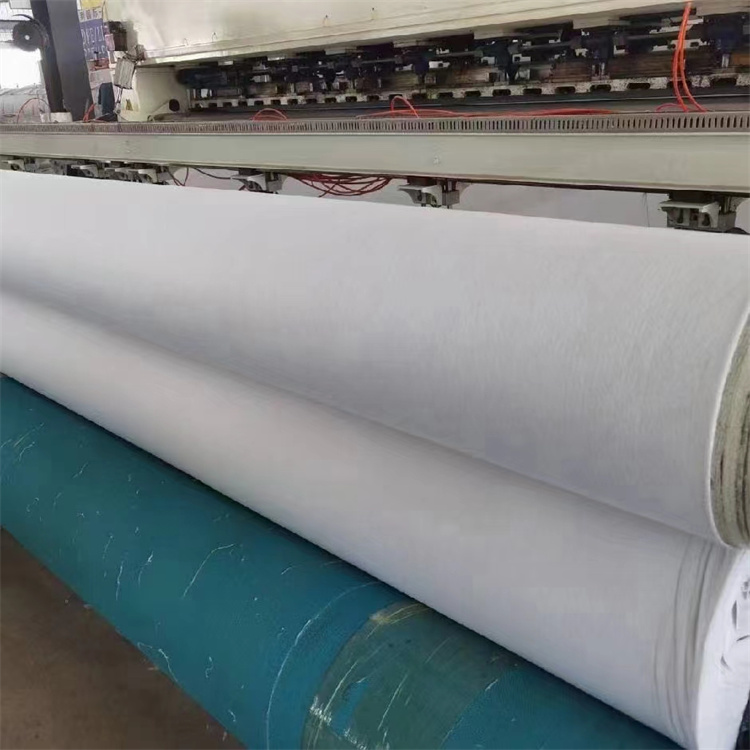
- Easy Construction: Lightweight and flexible, it can be produced in widths up to 9 meters, facilitating transportation and laying. It adapts to complex terrain, shortening construction period and reducing construction costs.
- Cost-Effective: Compared with traditional materials such as stone masonry and concrete, it features lower investment and better anti-seepage effect, and can reduce the loss of base materials by about 30%.
- Environmentally Friendly: Most are eco-friendly materials without chemical additives, and some products are biodegradable, meeting the needs of sustainable development.
Nonwoven Geotextile: The Multifunctional Engineered Fabric for Modern Infrastructure
Introduction to Nonwoven Geotextiles
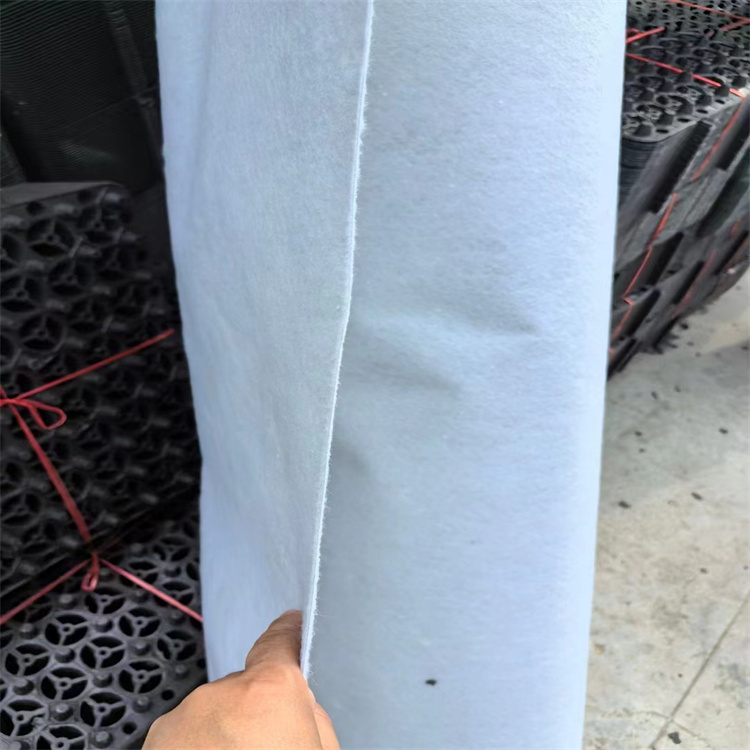
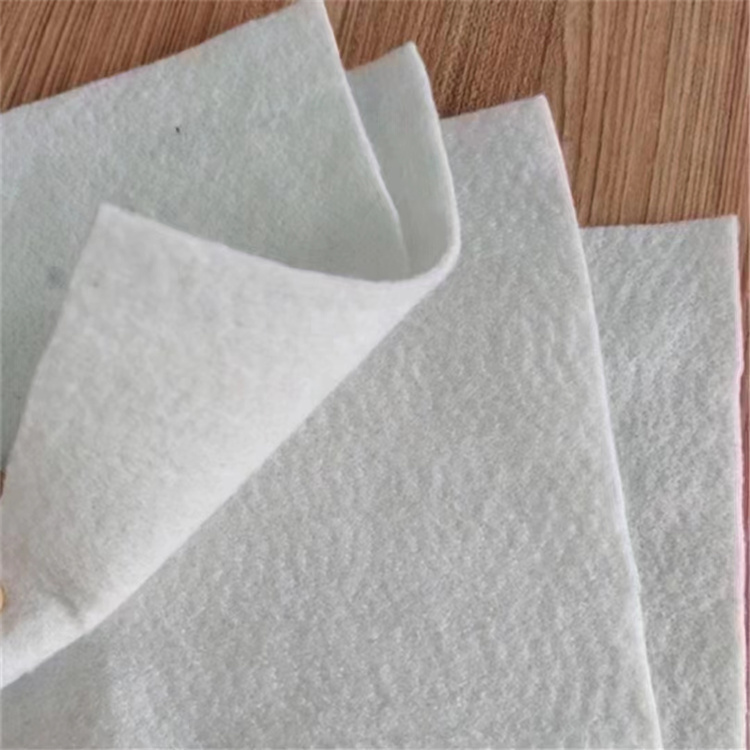
In the realm of geosynthetics, nonwoven geotextile stands as a fundamental and versatile solution for a multitude of civil, environmental, and construction challenges. As a permeable synthetic fabric engineered from durable polymer fibers—primarily polypropylene or polyester—it is mechanically, thermally, or chemically bonded to form a stable, felt-like sheet. Unlike its woven counterpart, the random fiber orientation in nonwoven geotextile fabric provides unique isotropic properties, making it exceptionally effective for separation, filtration, drainage, and protection functions.
For international B2B buyers, contractors, and civil engineers, understanding the precise capabilities and specifications of nonwoven geotextile is crucial for selecting the correct material to ensure project longevity, regulatory compliance, and cost efficiency. From roadways and railways to drainage systems and erosion control, this material is a cornerstone of modern, resilient infrastructure.
Product Characteristics and Key Specifications
Nonwoven needle punched geotextile is defined by a set of engineered physical, mechanical, and hydraulic properties. Its performance is not generic but tailored through variations in weight, thickness, and polymer composition.
Primary Physical & Mechanical Properties:
· Weight (Mass per Unit Area): Ranging from lightweight (100 g/m²) to heavyweight (2000 g/m²+) nonwoven geotextile, this directly influences strength, thickness, and flow characteristics. Common specifications for road separation start at 200 g/m².
· Thickness: Measured under specific pressure, it relates to compressibility and planar flow capacity.
· Tensile Strength: While typically lower than woven geotextiles in a single direction, nonwoven fabric exhibits good multidirectional strength due to its random fiber structure, measured via wide-width strip tests (e.g., ASTM D4595).
· Puncture and Tear Resistance: Critical for survivability during installation and service, protecting underlying membranes like geomembranes from sharp aggregates.
· Elongation: Exhibits high strain capacity, allowing it to conform to subgrade irregularities without failure.
Critical Hydraulic Properties:
· Apparent Opening Size (AOS): Indicates the approximate largest pore size, crucial for soil retention in filtration applications (e.g., O90 specification).
· Permittivity & Porosity: Define the fabric's ability to allow water flow normal to its plane (permittivity) and its percentage of void space (porosity). This is the core of its nonwoven geotextile for drainage function.
· Flow Rate (Transmissivity): For thicker grades, this measures in-plane water flow capacity, important for subsurface drainage applications.
Core Advantage
With its unique functional benefits, polypropylene nonwoven geotextile is becoming increasingly popular where these attributes can translate directly into project benefits.
Superior SeparationInterposed between two kinds of soil layers (e.g., a soft subgrade and aggregate base), it prevents muddling-together.
This holds together the structure and load-bearing capacity of the aggregate, prevents loss of aggregate into the subsoil, and is an important function of geotextiles in road construction.
Efficient FiltrationIts porous structure enables water to pass through while retaining soil particles.
This makes the soil impervious to "piping" or erosion while not hindering the flow of water - ideal for use behind retaining walls, in French drains, or in the vicinity of subsurface pipes.
In-Depth DrainageIts felt-like structure produces a synoptic surface for water to travel over, and acts as a capacitive support between layers of soil.A thick, heavyweight nonwoven geotextile (fabric) is specifically engineered to fill this cross plane with liquids or gases. It has all the properties for use in highways.
Reliable ProtectionLying between any sharp stones or rough earth subgrade and sensitive geomembranes (in landfills, ponds), it acts as a cushioning layer to prevent puncture.
Geotextile is usually specified as the cushioning material in a geocomposite for this reason. Even in highway applications it hides irregularities that would otherwise show through.
Durability and Longer LifeToday quality nonwoven geotextile is fabricated from UV-stabilized polymers and offers resistance to soil chemicals, microorganisms and controlled UV exposure so performance can span the years.
Primary Applications in Detail
·Roads & Highways: Used between subgrade and base course as a separator and stabilizer, prolonging pavement life and reducing maintenance costs.
·Airports: Under runways and taxiways providing stabilization between layers against heavy dynamic loads of traffic.;
Nonwoven geotextiles are multi-applicable over a number of industries.
Drainage systems
Sub-Surface Drains The non-woven geotextile for drainage applications is wrapped around aggregate or pipe drains acting as a filter fabric. It prevents clogging and at the same time allows water to seep in.
Sport Fields and Landscaping Provides for subsurface drainage which eliminates waterlogging on the surface and promotes a healthy turf.
Environmental projects and projects that involve containment
Landfill Liners and Covers Serves as a protection layer over geomembranes; serves as well a filter/drainage layer in leachate collection systems.
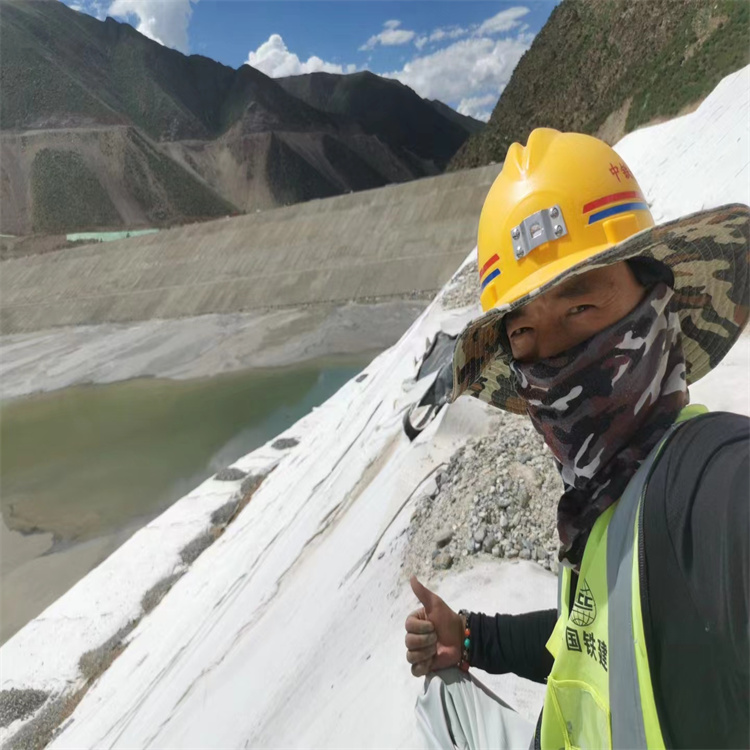
Erosion Control Used beneath riprap on slopes or as a component in erosion control blankets, to stabilize soil until vegetation is established.
Sediment Control Put in silt fences and turbidity barriers, to filter silt runoff on construction sites.
Other construction uses
BENEATH FOUNDATIONS Acts as separation and potential capillary break.
POND AND CANAL LININGS Protects impermeable liners.
Production and installation overview
Manufacturing process:
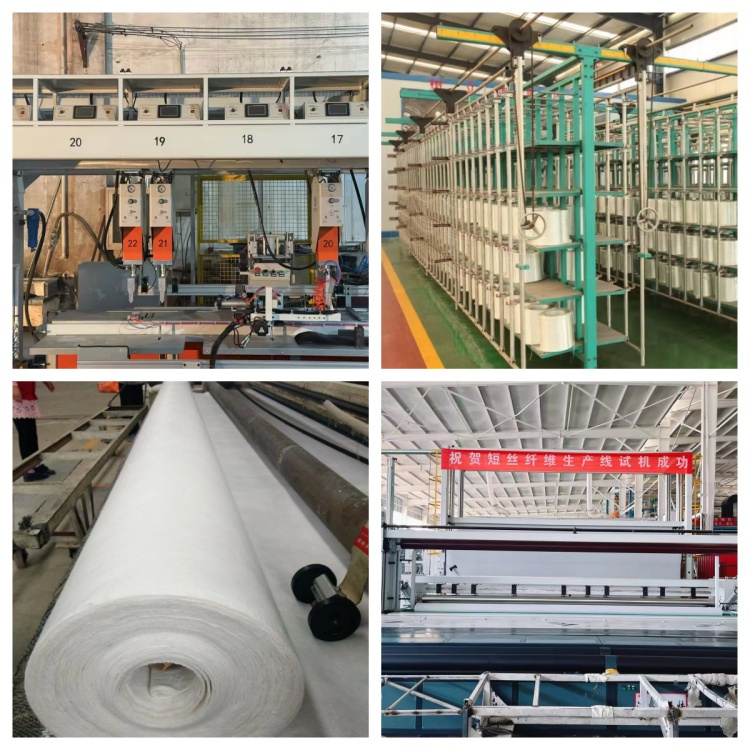
Ultimately, Needled nonwoven geotextile is produced mainly by the needle-piercing process. 1. Polymer Extrusion Polypropylene chips are melted and then extruded into continuous filaments. 2. Web Formation A chicklay laid by a chicken on the conveyor belt, randomly entangling filaments form into a loose web. 3. needle piercing Machine-held barbed needles repeatedly punch through the web, mechanically entangling the fibers to create a strong, coherent fabric. 4. Flatspinning Finishing may include calendaring (heat pressing) to control thickness or the addition of treatments for UV resistance.
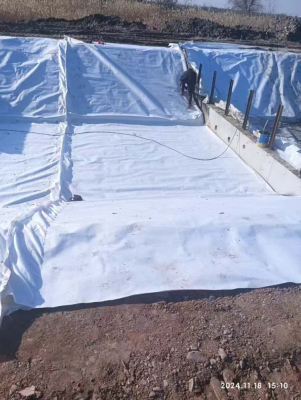
Site organization The subgrade ought to be graded and compacted, and clear of jagged objects.
Placing rolls of Nonwoven Geotextile: This is carried out either by hand or mechanically. The type of man and amount all depends on the nature the project.
Overlap and attachment: Rolls next to each other should have sufficient overlap. Usually this is between 300 and 600mm. (Minimum) On slopes it shall be fastened in a trench at the top, and fixed with pins.
Immediate backfill exposed geotextile should be covered with backfill material (earth, aggregate) as soon as possible to keep out UV damage and reduce wind-induced displacement of. Backfilling should be done gently, not by permiting the fill to fall from a great distance.
FAQ for International Buyers
Q1: What is the main difference between needle-punched and heat-bonded nonwoven geotextile, and which should I choose?
A: Needle-punched geotextiles are mechanically entangled, resulting in a thicker, more porous fabric ideal for drainage, filtration, and protection. Heat-bonded (thermally bonded) geotextiles are thinner and stiffer, with smaller pores, better suited for separation where filtration is less critical but high in-plane strength is needed. For most civil engineering applications like road separation with drainage function, needle-punched nonwoven geotextile is the standard choice.
Q2: How do I determine the correct weight (g/m²) and strength for my road construction project?
A: Specification depends on subgrade strength (CBR value), aggregate size, and traffic load. A weak subgrade (CBR < 3) typically requires a heavier, stronger geotextile (e.g., 200-300 g/m² or more) with high puncture resistance. For standard subgrades, 120-200 g/m² may suffice. Always refer to civil design guidelines (like AASHTO or local standards) or consult directly with your nonwoven geotextile manufacturer for project-specific recommendations.
Q3: Can nonwoven geotextile be used for permanent erosion control on slopes?
A: While it can be used as an underlayer beneath riprap or in biodegradable rolls, for long-term vegetative erosion control, a woven geotextile or a specialized erosion control mat is often more suitable due to higher tensile strength. Nonwoven geotextile is excellent for temporary sediment control and subsurface drainage on slopes but may not provide sufficient long-term reinforcement against shear forces on steep slopes alone.
Q4: What certifications should I look for when sourcing bulk nonwoven geotextile?
A: Demand products certified to relevant international standards. Key certifications include test reports against ASTM (e.g., D4595 for tensile, D4751 for AOS) or ISO standards. For the European market, CE Marking under the Construction Products Regulation (CPR) is essential. Also, request a Certificate of Conformance (COC) from the manufacturer guaranteeing the product meets the specified technical parameters for your order.
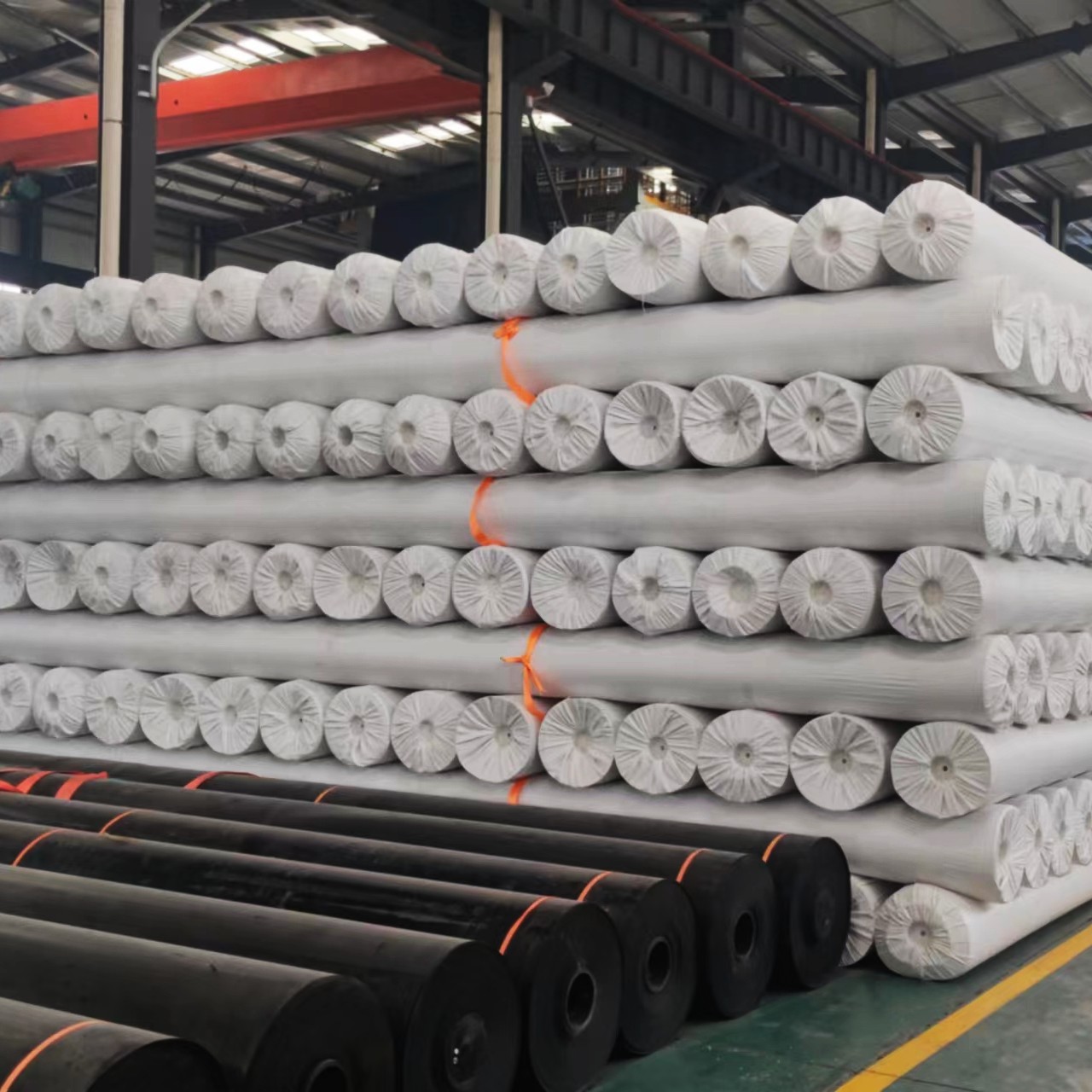
Our Factory
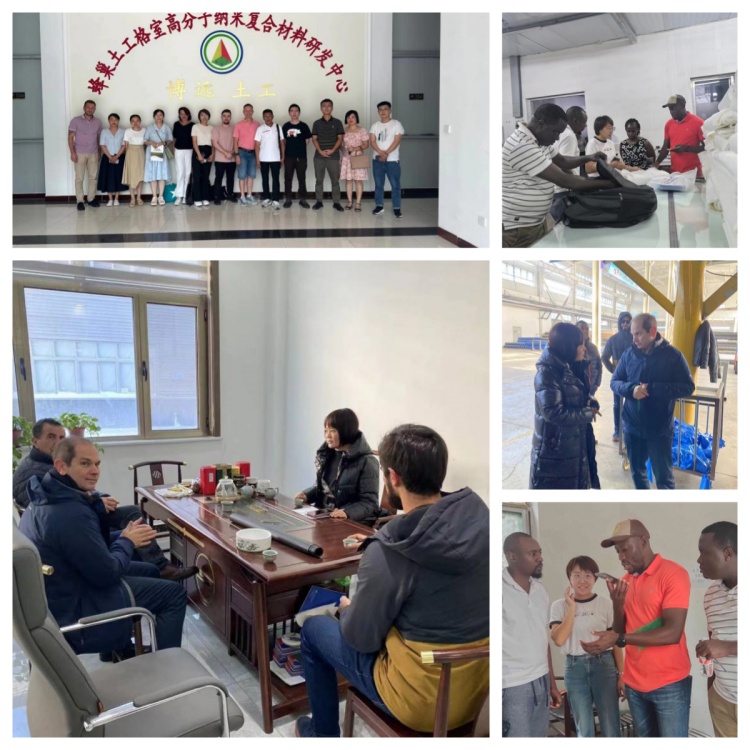
Customers Visit